
LevelBlue Completes Acquisition of Cybereason.  Learn More

LevelBlue Completes Acquisition of Cybereason.  Learn More

Services
Cyber Advisory
Managed Cloud Security
Data Security
Managed Detection & Response
Email Security
Managed Network Infrastructure Security
Exposure Management
Security Operations Platforms
Incident Readiness & Response
SpiderLabs Threat Intelligence
Solutions
BY TOPIC
Offensive Security
Solutions to maximize your security ROI
Operational Technology
End-to-end OT security
Microsoft Security
Unlock the full power of Microsoft Security
Securing the IoT Landscape
Test, monitor and secure network objects
Why LevelBlue
About Us
Awards and Accolades
LevelBlue SpiderLabs
LevelBlue Security Operations Platforms
Security Colony
Partners
Microsoft Security
Unlock the full power of Microsoft Security
Technology Alliance Partners
Key alliances who align and support our ecosystem of security offerings
Loading...
Loading...

HOWTO: Sending data from tcpdump with grep to a text file for later analysis

Expand / Collapse


This article applies to:

  • SIEM OE 5.x (DA)
  • SIEM LP

Question:

  • I'm using tcpdump and grep to check on data flow into my SIEM system
  • There is too much data and it scrolls too quickly. How can I save the data so that I can review and analyze it later?

Procedure:

To save the output of a command for later viewing, you can send the results straight to a text file using the standard out operator ">" (or ">>", see the note below).

To allow files to be easily found, use mkdir to create a temporary directory to store the files:
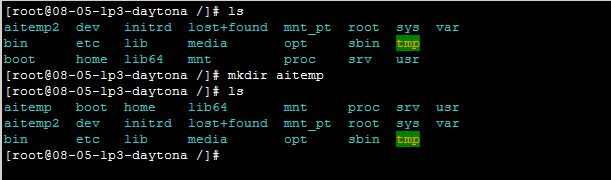
Next, experiment with tcpdump and grep to filter the data you need.

Once you have worked out the appropriate commands and filters in place, run the command and use "> /{directory}/{text file name}" to send the results to a text file.

Your command should look something like this:

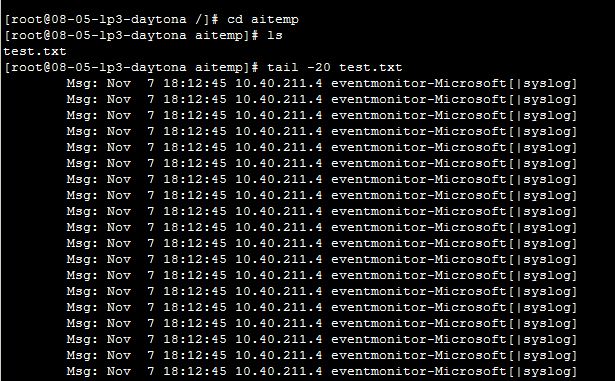
The below screenshot shows how to check a portion of the text file for the output (you may want to navigate back to the root directory / in order to simplify entering the file name):
Note:

Once the original file has been created, using ">" to send more data to the same file will overwrite the data that already exists.

To append data, use the ">>" operator instead. 


To contact Trustwave about this article or to request support:


Rate this Article:
     

Related Articles


Add Your Comments


Comment submission is disabled for anonymous users.
Please send feedback to Trustwave Technical Support or the Webmaster
.